
The Arafura Swamp
10 July 2017
Accompanied by guides Frankie and Michael of the local community we set off on Monday morning for a discovery tour of areas around the perimeter of the Arafura Swamp.
Frankie is a bit of a character -very communicative, even if most of his communication was in his native language.... But he also explained how local plants had been used by his ancestors (the 'old people') in quite good english. His expressive hand gestures also helped. Michael, Frankie's brother, was more reserved but very friendly and helpful.
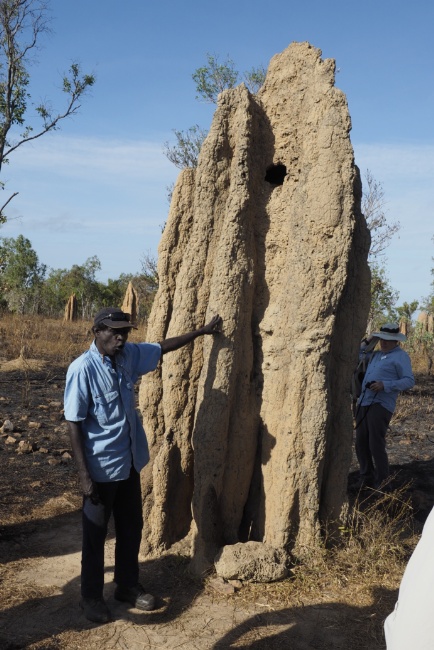
Frankie explains how termite mounds were used for cooking. This one has the nest of a Blue-wing Kookaburra about 1 metre from the top.
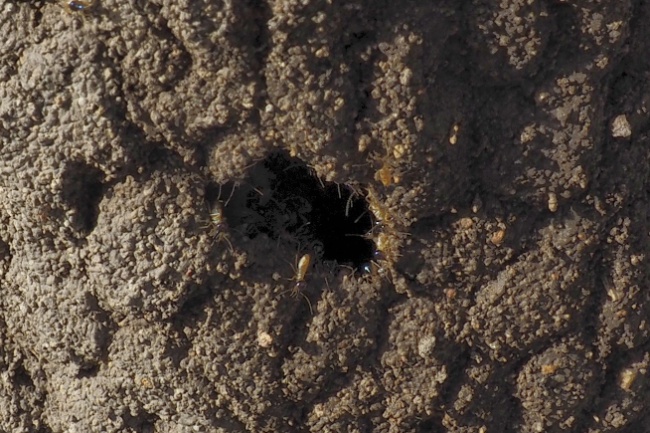
Termites remairing damage to the mound.
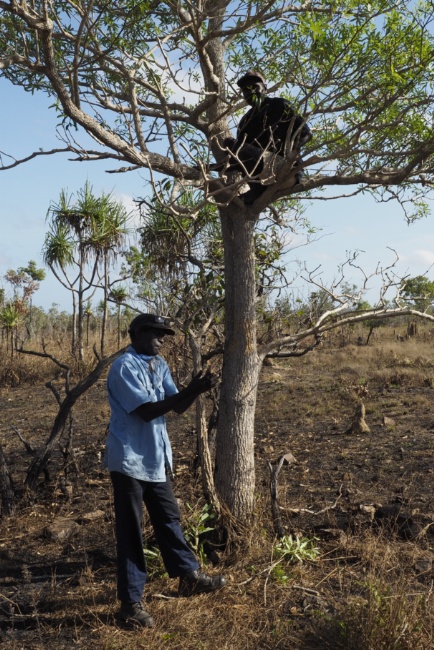
The milkwood tree had many uses. Large ones were worked to form dugout canoes, because the wood is quite soft. The milky sap was used both as an antiseptic and as a glue, while the roots could be used as a fish poison.
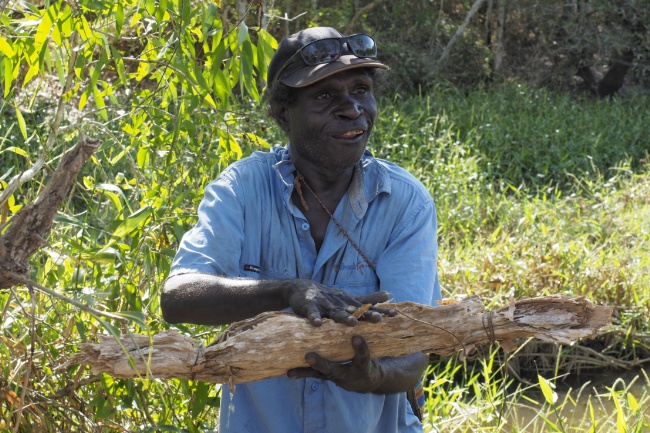
Frankie with a paperback water carrier.
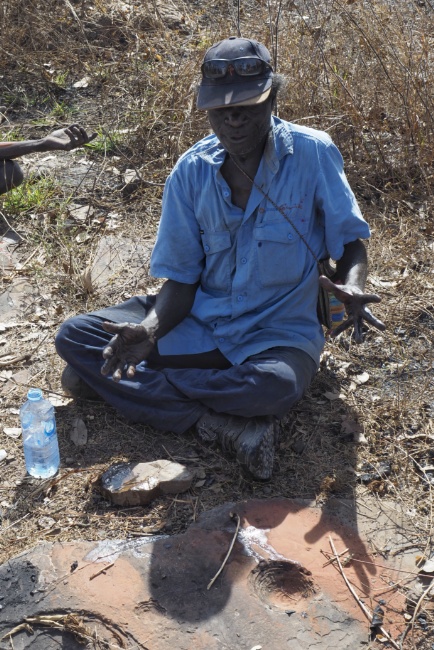
Frankie demonstrates the mixing of water with ochre to produce a paint for ceremonial use. Note the circular grinding hole in the foreground.
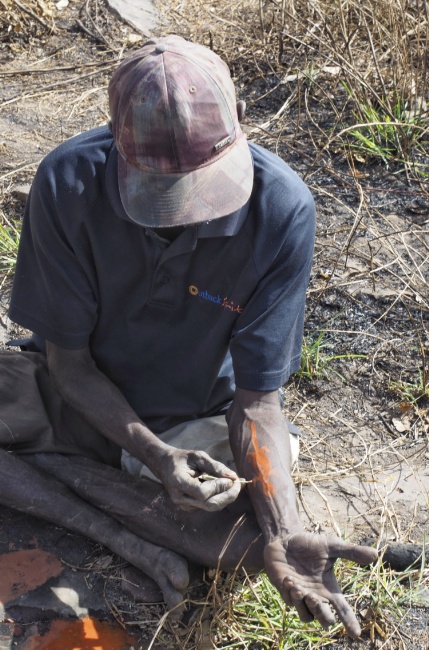
Michael uses an ochre mixture for some body painting.
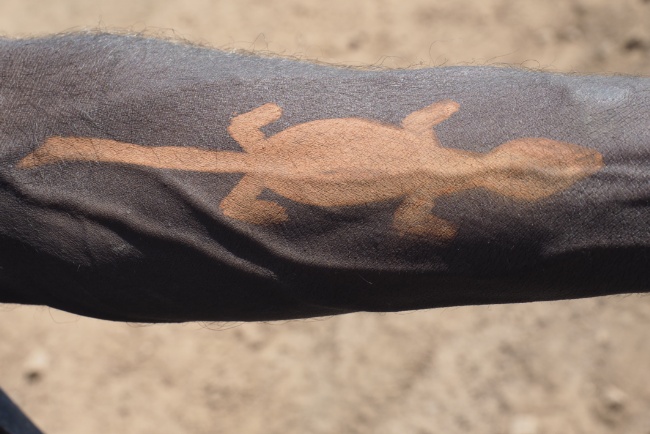
Michael's goanna.
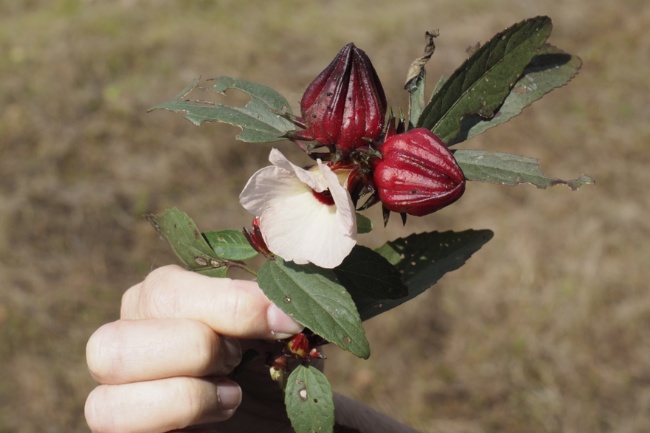
The fruit of the Rosella - not a native plant, but widely used as a food source by indigenous people.
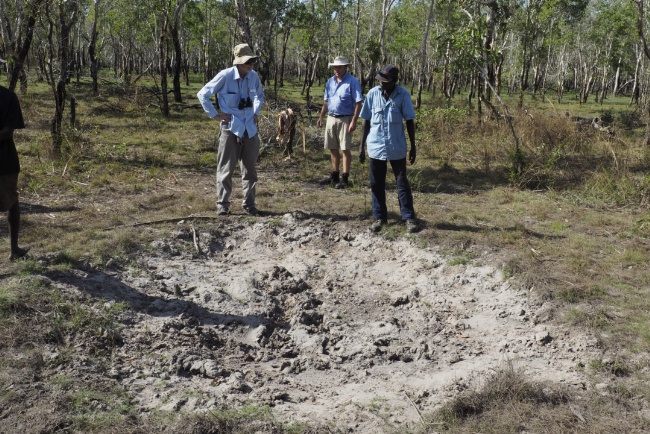
A dried out buffalo wallow -during the wet season, buffalos dig out these large circular mud baths.
Later, in the afternoon we set out for a leasurely tour on one of the swamp's billabongs to marvel at the variey of birdlife. Phill, our guide, was enormously enthusiastic - especially about his palms- and it rubbed off.
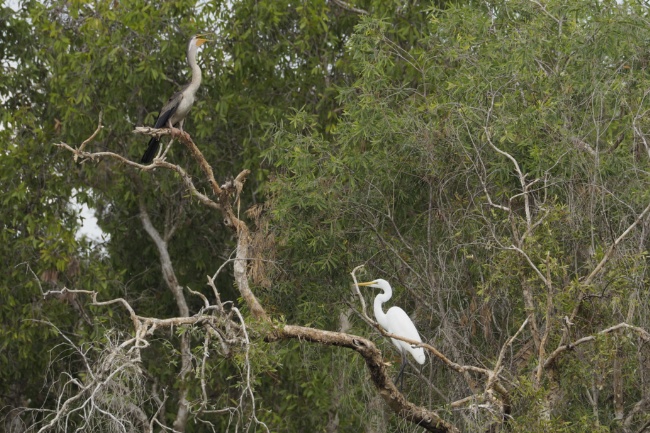
Australian Darter (top) and Great Egret (bottom).
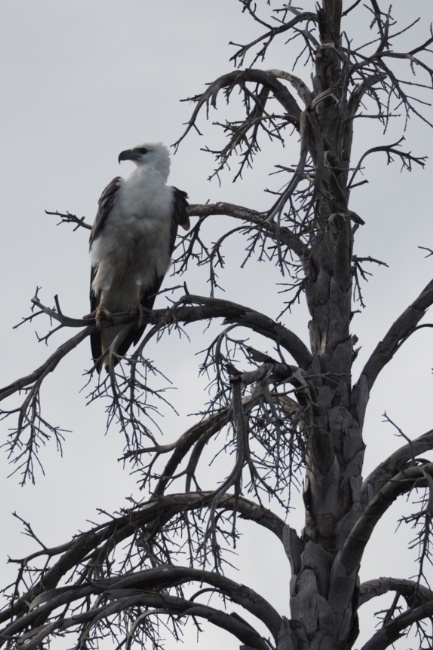
White-bellied Sea Eagle.
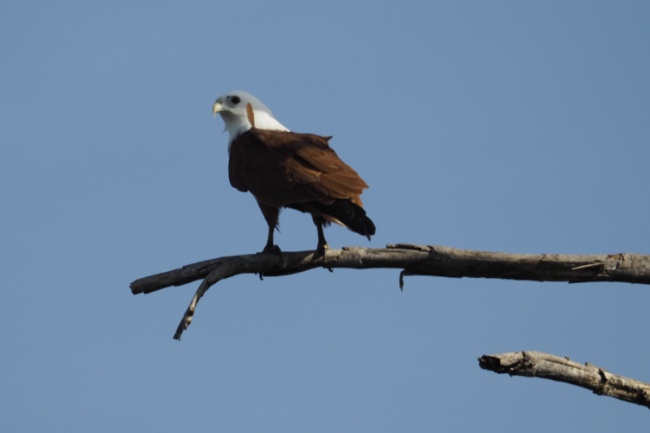
Brahminy Kite.
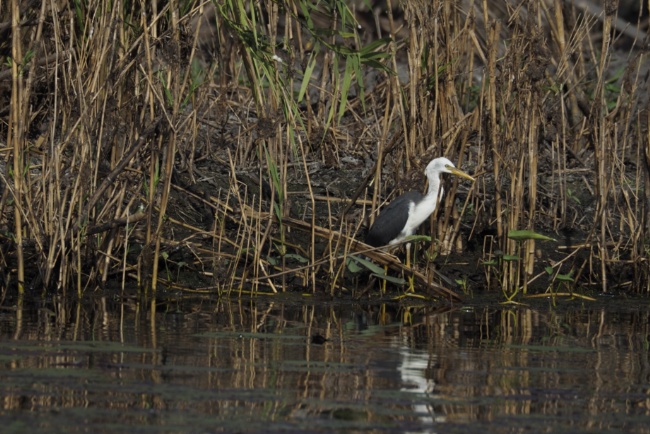
Pied Heron in the shallows.
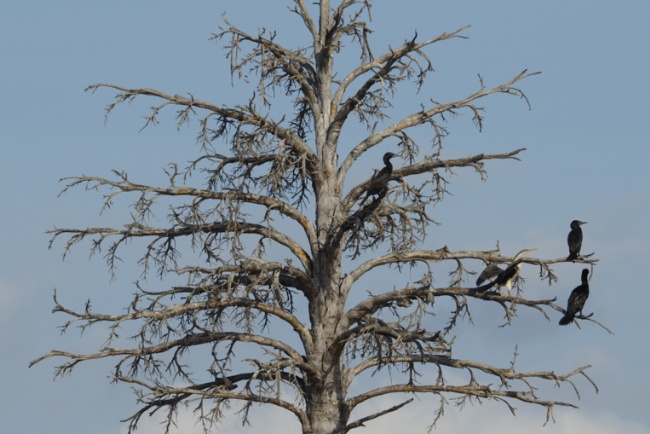
Cormorants on a dead Arafura Palm.
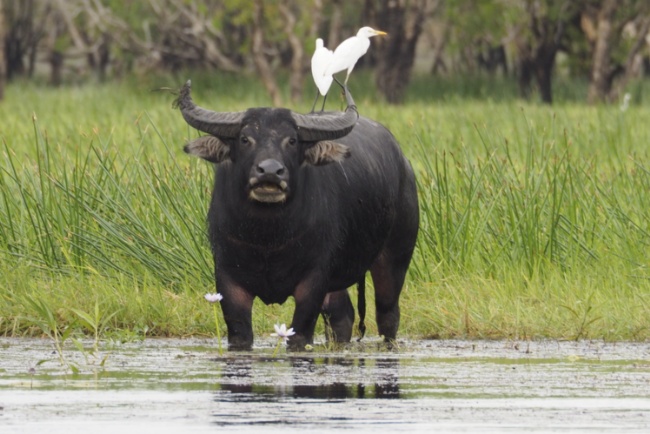
A buffalo cooling off.
| << Previous | Return to Index | Next >> |