
Laura and the Atherton Tableland
22 to 25 July 2017
After Cooktown our next overnight stop was Mareeba on the Atherton Tableland but at Lakeland we turned off the Mulligan Highway for a 60 km diversion to Laura where we hoped to be able to see some of the Quinkan rock art - recognised by the Australian Heritage Commission as constituting "some of the largest bodies of prehistoric art in the world". Unfortunately, the 2½ hour guided tour would have taken too much time to organise (we should have booked ahead from Cooktown) so, after spending some time at the excellent Cultural Centre and a cup of coffee at the local pub, we headed out to the self-guided Split Rock walk, about 10 km out of town.
On arrival we noticed that the Outback Spirit coach I had seen at Cooktown the previous evening was in the parking lot with the passengers just getting ready for the walk up to the Split Rock rock art galleries. The group had an indigenous guide with them so, as I was wearing my Outback Spirit hat, we thought we might be able to attach ourselves surruptiously to the group without anyone noticing (just kidding - the coach driver was quite happy for us to join the group). The walk is steep in parts and involves a bit of scrambling so Marg, who had been feeling a bit unwell for a day or two, opted to remain at the shelter at the start of the walk with two of the official tour members.
Small World Department: After about 20 minutes of climbing we reached the first of the galleries where I started chatting with some of the tour members about our Arnhem Land tour. Suddenly a familiar face appeared in front of me. Brian Roach is a fellow member of the Australian Plants Society and we've known each other for years, although it's been a couple of years since our paths last crossed (we even went to the same school). What are the odds on us meeting up completely 'out of the blue' in a rock shelter in outback north Queensland?
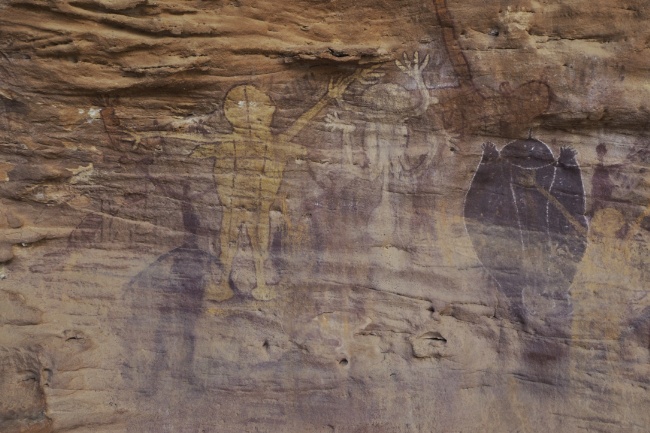
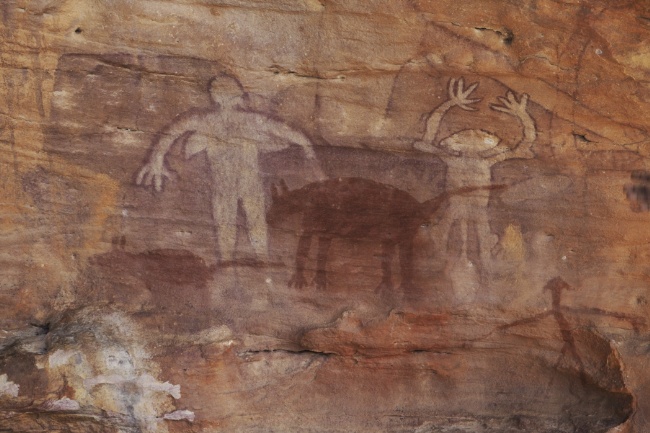
Rock art at Split Rock - Laura
Back on the road we made our way into Mareeba with no bovine issues. Unfortunately we had to cancel our planned visit to the Undara lava tubes because Marg had come down with a mysterious illness which involved a visit to the Mareeba hospital on Saturday night. The doctor prescribed antibiotics but recommended against travelling to Undara because there would be limited medical help there if the problem didn't improve. Fortunately the antibiotics kicked in slowly but we were disappointed in missing the lava tubes and the 'Wildlife at Sunset' tour at Undara
On Sunday I took the opportunity to visit the Mareeba Wetlands a few kilometres north of the town while Marg rested. The wetlands are beautifully located but few birds were in evidence while I was there. However, the Wetlands has a breeding program for the endangered Gouldian Finch and several were active in an aviary at the visitor centre.
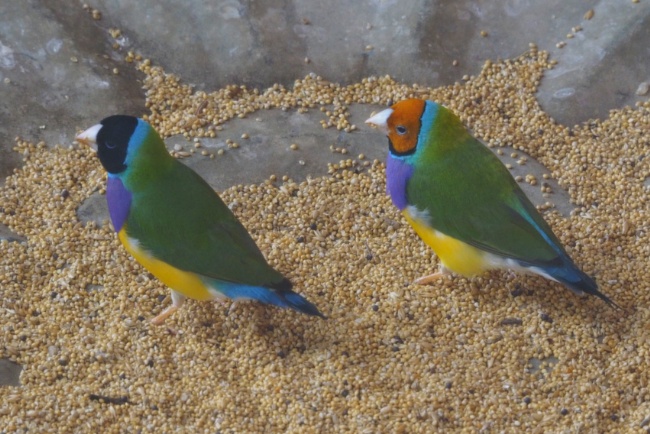
Gouldian Finches - Mareeba Wetlands
On Monday we meandered the 35 km down the Kennedy Highway to Atherton for another two night stay. At Tolga we stopped at the Rocky Creek War Memorial Park which honours men and women who served in WW2. We found the plaques for the units in which both our fathers served. After lunch a quick look at Yungaburra was followed by a tour of the crater lakes, Lake Barrine and Lake Eacham.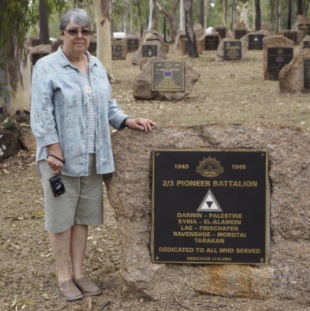 |
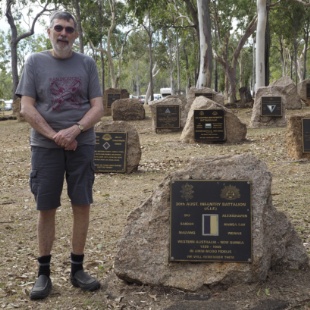 |
Rocky Creek War Memorial Park
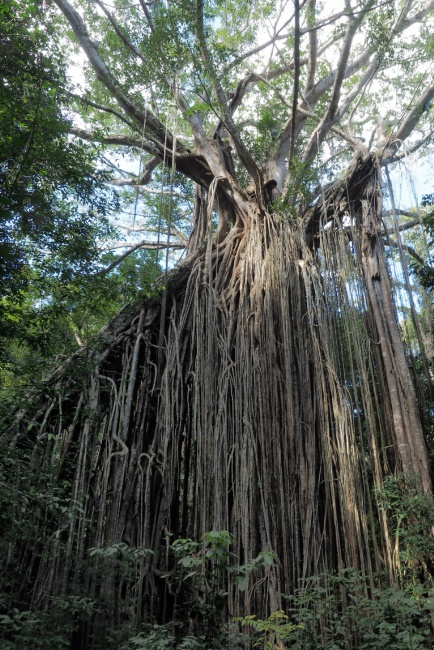
Curtain Fig - Yungaburra
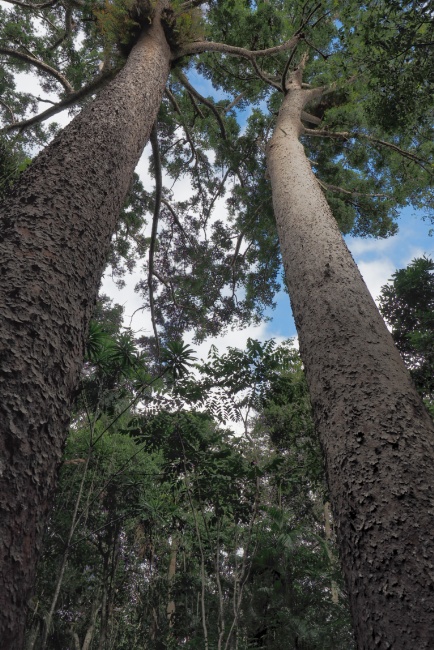
Twin Kauri Pines - Lake Barrine
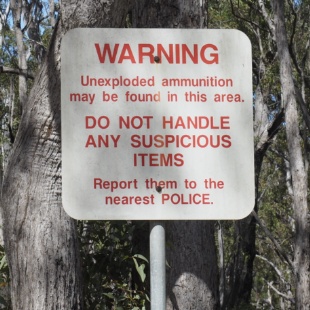 |
On Tuesday we headed off to Ravenshoe to find the area on the Atherton Tableland where Marg's father was based for jungle training during the war. The Tableland was used extensively for training but there's little left to indicate that the Army was ever there apart from signs indicating the location of camps used by the various units. Near Millstream Falls west of Ravenshoe, a walking trail has been established through the area used by the 7th Division and, later, the 9th Division (Marg's father's unit) but, again, there's little evidence of military occupation as the barracks and other installation were either removed or buried after the war. The only significant item remaining is the remains of an African-style fireplace which was constructed by the 9th Division in 1944 and which was part of the Officers' Mess tent. Evidence that this was a very active training centre can be appreciated by the presence of a number of signs warning of possible unexploded ammunition in the area.
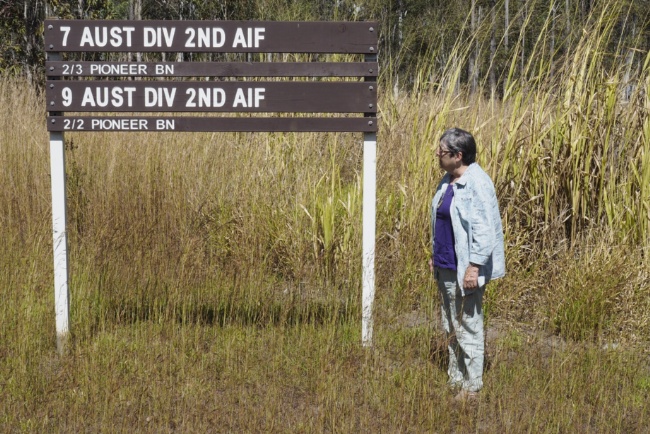
Camp site for 2/3 Pioneer Battalion - Ravenshoe
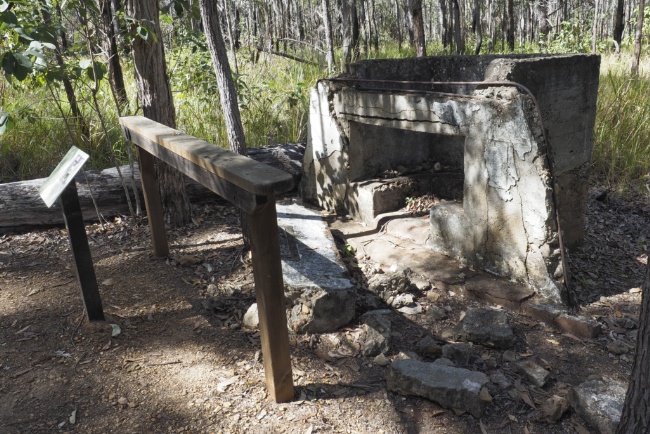
Remains of fireplace built by the 9th Division - Ravenshoe
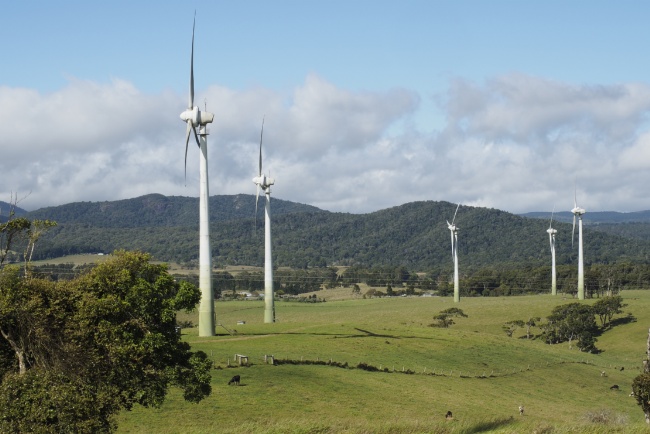
The aptly named Windy Hill Wind Farm - Ravenshoe
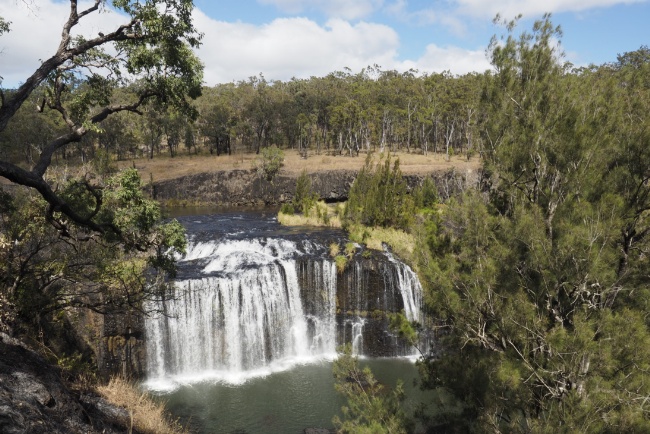
Millstream Falls - Ravenshoe
Back in Atherton, I visited Hasties Swamp hoping, at last, to see some birdlife. I wasn't disappointed with around a thousand or more very noisy Whistling Ducks around the excellent two-storey hide. A similar number of Magpie Geese were honking away in a group on the far side of the swamp.
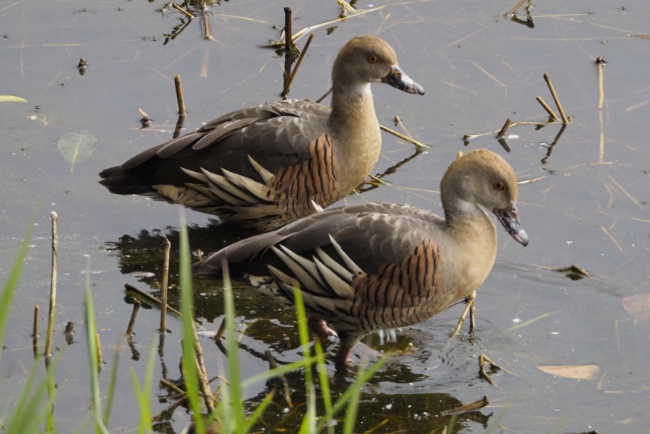
Plumed Whistling Ducks - Hasties Swamp, Atherton
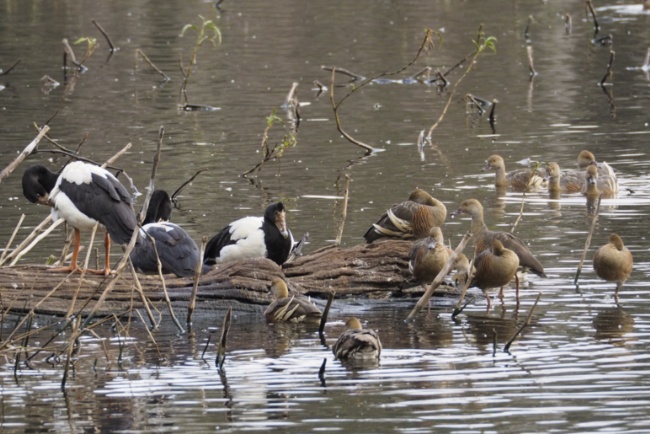
Magpie Geese and Whistling Ducks - Hasties Swamp, Atherton
| << Previous | Return to Index | Next >> |